About Claire
There is nothing
you can bring me
that I can't handle.
I have been inside the systems that failed you. I know what they miss, what they dismiss, and what they will never be designed to see. And I have sat with families carrying exactly the kind of complexity you are carrying right now.
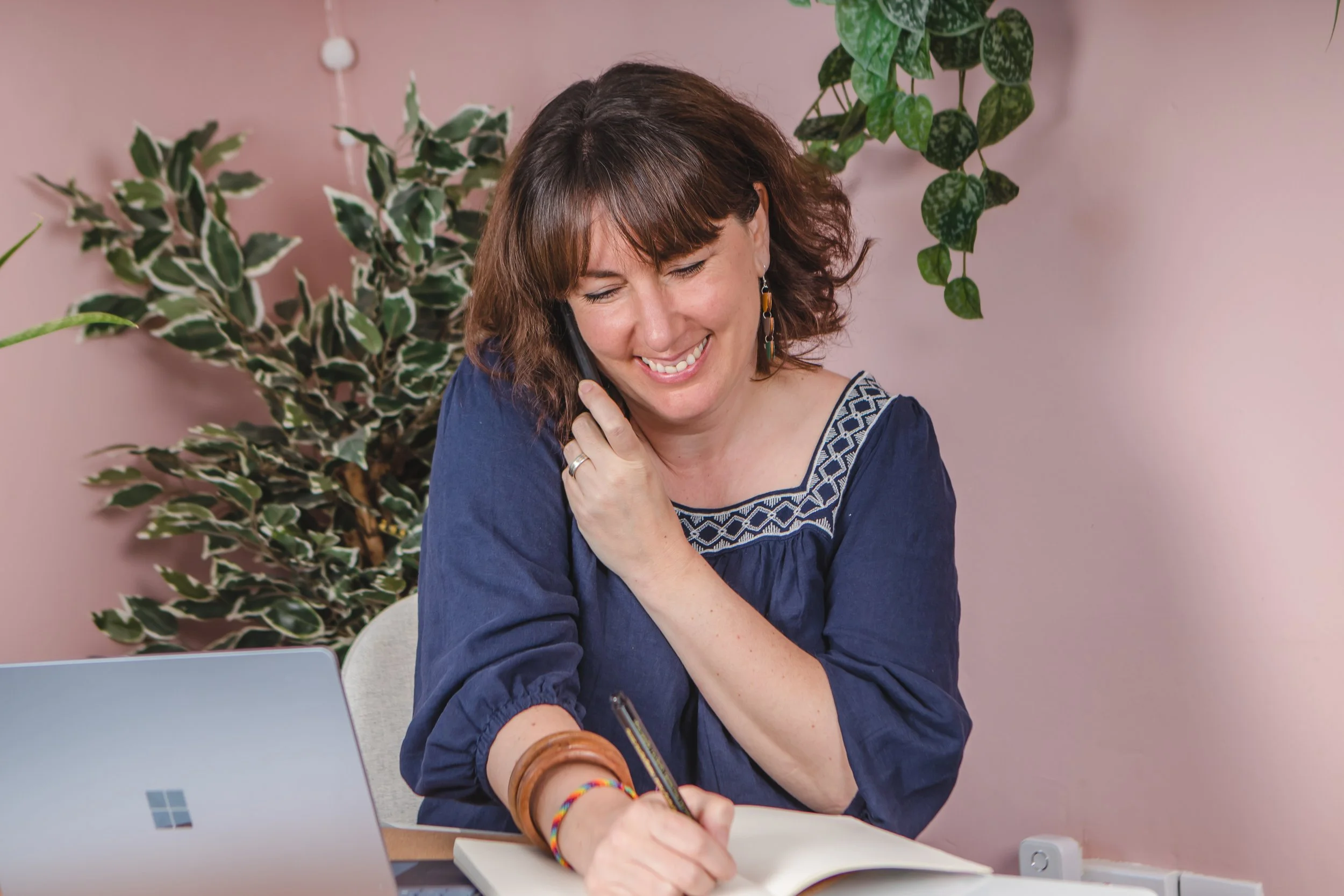
I started out wanting
to fix the system.
I ended up learning
how to navigate it.
I trained as a social worker at the University of Bristol, having already studied psychology and neuroscience at Manchester. I wanted to understand how people work — at the neurological level and the systemic level — and I wanted to use that understanding to help.
What I found, across eighteen years of direct practice, was that the system rarely needed fixing from the outside. What people needed was someone on the inside who understood how it worked, what it would and wouldn't do, and how to move through it strategically. That became my work.
Across CAMHS, adoption support, infant mental health, family support and complex needs advocacy, I developed what I would now call a methodology: hold the whole picture first, before touching the paperwork. Understand what is actually driving things, not just what is presenting. Then work out what to ask for, from whom, and in what order.
The work I have loved most has always been the work that sits at the intersection of things. The child with a visual impairment and an unrecognised neurodivergent profile, navigating a school system and a health system simultaneously. The family whose GP is seeing one slice, whose CAMHS team is seeing another, and whose school is seeing a third — and nobody is holding the whole picture.
That gap — between what the system offers and what a family actually needs — is where I have always worked. It is where I still work now.

“I have the training of a social worker. Twenty years inside these systems, and I have chosen to talk to families rather than write reports about them. Not despite my background. Because of it.
”
Lived experience
I know these systems
from the inside.
Both sides of the inside.
I am a late-identified neurodivergent woman. I spent decades navigating a world that was not designed for my brain, without the language to understand why things were harder than they seemed to be for other people. I came to understand ADHD not through a diagnosis but through recognition — the particular texture of it, the hyperfocus and the dropout, the pattern recognition and the inconsistency, the gap between what you know you can do and what you can actually produce on a given day.
I am also a home educating parent of a child with complex needs. I know what it feels like to hold a child's whole picture in your head while systems see only their piece. I know the exhaustion of having to repeat the story at every appointment, from scratch, to someone who has not read the notes. I know the particular loneliness of being the most informed person in the room about your own child, and still feeling like you cannot make anyone listen.
That combination — the professional knowledge and the lived experience — is not incidental to this work. It is the work. It is what makes the difference between someone who understands the system and someone who understands what it feels like to be failed by it.
Their attention to detail and commitment to quality truly stood out. We’ve already recommended them to others.
—Former Customer